


1:1 Proto Naked Flavorless Energy Drink - 500g (12serv) Pouch
Product Highlights
Product Highlights:* NATURAL Flavors
* NO Artificial Sweeteners
* NO Colors
* NO Preservatives
* Optimal carbohydrate blend (2:1 Maltodextrin:Fructose)
* With 5 key electrolytes
* Available in 'Single Measure' re-usable/recyclable aluminum canister
Dairy Free
Wheat Free
Gluten Free
Suitable for Vegans
Description
- 1:1 Maltodextrin:Fructose
- Engineered for Ultra-High Carb Intakes
- Multiple Transportable Carbohydrates
- Contains 5 Key Electrolytes
- 40g Carbohydrate per 500ml
- Light & Refreshing (NAKED = Neutral, like fortified water)
Our 1:1 Proto Energy Drinks have been formulated specifically for ultra-high carbohydrate intakes of 120g+ per hour. TORQ use high-grade maltodextrin, a low-osmolality, high-glycaemic index form of glucose, and blend this at a 1:1 ratio with fructose.
Research has proven that 1:1 glucose-fructose formulations deliver extremely high levels of carbohydrate to the blood and have demonstrated some of the highest carbohydrate oxidation rates ever recorded. This high-level fuelling ultimately translates to stronger endurance performances.

The TORQ 1:1 Proto range consists of 3 energy drinks and 3 energy gels, with each product containing 40g of carbohydrate in a 1:1 glucose-fructose formulation. We have called these Advanced TORQ Units, or ATUs, since our regular TORQ Units apply to our 2:1 range. To achieve 120g carbohydrate per hour, you simply need to consume any combination of 3 ATUs.

The 1:1 Proto Energy Drink powders are added to 500ml water and provide 40g of carbohydrate along with the full complement of 5 electrolytes. The gels are much more concentrated and provide the same dose of carbohydrate in a much more compact package.
In warmer weather, when perspiration rates are higher, you should drink more Energy Drink ATUs and consume less Gel ATUs. In cooler conditions, when perspiration rates are lower, the opposite is true and less should be drunk, with more consumed via gels. Every situation is different and you should be prepared to adapt to the environmental conditions accordingly. Often these conditions can change during an event and you will need to adapt to maintain the hydration/fuelling balance.

IMPORTANT: TORQ 1:1 Proto products are only optimal at ultra-high carbohydrate intakes. Unless you are aiming to commit to 120g+ of carbohydrate intake per hour, you should use our regular 2:1 TORQ Fuelling System range of products.
TORQ 1:1 Proto Energy Drink is available in single use sachets, to be added to 500ml of water. This product is also available in 500g pouches (makes 11 X 500ml). Sample Packs are also available from this website.
All pouches are supplied with a scoop.
Use 1 level scoop of TORQ 1:1 Proto Energy powder per 250ml of water (2 scoops for 500ml, 3 scoops for 750ml and 4 scoops for 1 litre). Always add powder to water, not water to powder to ensure easy mixing.
Half fill bottle with water, add level scoops of powder, replace lid and shake vigorously. Top bottle up with water, shake again. Your TORQ 1:1 Proto Energy Drink is now ready to drink.
Technical Information:
First of all, it’s vitally important that we explain the differences between our existing 2:1 range of products and the new 1:1 Proto range. We want to help you to make the correct fuelling choices and there are very important nuances to consider.
TORQ’s 1:1 Proto range serves a different purpose to our 2:1 range. You will learn as you read further, that our 1:1 Proto products can indeed support higher levels of endurance performance, but they do require a commitment to ultra-high carbohydrate intakes of 120g+ per hour. Unless that commitment is made, they will not perform as well as our 2:1 products.
Our 2:1 formulations actually function more favourably than 1:1 Proto at intakes of up to 90g of carbohydrate per hour – a level of carbohydrate intake practiced by most people. In order to progress your intake from 90g to 120g+ per hour, then a blend of 2:1 and 1:1 Proto products can be used and in this section we tell you how to make the transition.
It is really important that you assess your personal needs and choose the products that are right for you. Regardless of whether you choose 2:1, 1:1 or combine both formulations, TORQ are here to support your endurance goals with our comprehensive range of Performance Nutrition products.
Why Carbohydrate Fuelling is Important
Glycogen is the form in which carbohydrate is stored endogenously (in our muscles and liver) within the human body. Consuming exogenous carbohydrate during exercise through sources like energy drinks and gels provides an alternative fuel source for the muscles to use. By supplying exogenous carbohydrate, it reduces the reliance on stored glycogen, slowing its depletion during exercise.
For decades, carbohydrate fuelling during exercise has been considered fundamental for endurance performance, helping offset muscle and liver glycogen depletion, extending time to exhaustion, and allowing the athlete to sustain higher exercise intensities.
More is Better
It stands to reason that the more exogenous carbohydrate that can be consumed and used, the greater the above benefits. There is also strong evidence supporting the protective effect that high exogenous carbohydrate consumption has on muscle – it reduces muscle damage.
However, understanding the human limitations of exogenous carbohydrate absorption and subsequent use is key. Whilst more is technically better, there is little point in over-consuming on carbohydrate to the point of rejection. We have absorption and oxidation limits, and these has been studied fiercely over the last 20 years or so. Oxidation refers to the amount of carbohydrate we actually burn.
Maltodextrin is Glucose
Maltodextrin is a long-chain glucose polymer and has several performance advantages over ordinary glucose. It has a lower osmolality than glucose, a higher GI (glycaemic index) and is significantly less sweet. This is why Maltodextrin is used in TORQ’s performance products instead of glucose. For the purposes of this section of our website however, consider glucose and maltodextrin to be interchangeable – both are considered to be forms of glucose.
Glucose is Preferable Over Fructose
Glucose is a more usable form of carbohydrate than fructose, simply because fructose needs to be processed by the liver and converted into glucose so that the body can oxidise/burn it. Glucose is ‘ready to go’ so any nutrition strategy should involve maximising glucose intake. That said, any fructose that can be provided in addition to glucose will always bring performance benefits.
Absorption of Glucose and Fructose
Glucose and fructose are absorbed into the blood, from the intestine primarily via separate carriers – SGLT1 and GLUT5 respectively.
The gastrointestinal tract can only absorb a limited amount of glucose via SGLT1, typically in the region of 60g per hour. Once this limit is reached, consuming more glucose won’t improve performance but instead risks gastrointestinal distress – the body simply cannot absorb it.
When fructose is consumed alongside glucose, overall carbohydrate absorption can increase, because fructose takes a separate pathway into the blood via GLUT5.
As research has demonstrated that glucose absorption is limited to around 60g per hour, with little room for flexibility, how much fructose can be absorbed? Unfortunately, there isn’t a definitive answer to this question, but it does appear that this is much more than previously thought. The environment needs to be ripe for fructose absorption, and this is where the science of glucose-fructose ratios comes in.
Glucose Facilitates Fructose Absorption
When fructose is consumed in isolation, only relatively small amounts can be tolerated compared to glucose, which is largely due to the transport capacity of GLUT5. Any excess fructose that can’t be absorbed in the small intestine passes into the large intestine, where it is fermented by gut bacteria and can cause gastrointestinal (GI) distress. This is one of the reasons why energy products with a high fructose content do not perform well. The other reason has already been discussed – fructose is not a form of carbohydrate that is as instantly usable as glucose.
When Fructose is consumed alongside glucose, absorption improves. Glucose not only uses a separate pathway via SLGT1, but also enhances fructose uptake through 2 mechanisms:
Recruitment of GLUT2 transporters – these additional transporters are activated by the presence of glucose and result in large amounts of fructose being drawn into the blood.
SGLT1-mediated facilitation of solute absorption– the activation of SLGT1 creates good conditions for absorption of other nutrients within the small intestine, including fructose.

For the purposes of this section of our website, the above mechanisms will be collectively referred to as GLUT2+ from this point onwards.
It stands to reason that as SGLT1 approaches saturation (around 60g per hour), more total fructose can be absorbed. How much fructose? It is this question that is stimulating the curiosity of researchers and is where the ratio between glucose and fructose becomes important to understand.
2:1 Maltodextrin-Fructose
If you’re a longstanding TORQ customer, you will have been aware of us extoling the virtues of 2:1 Maltodextrin-Fructose since about 2005 when we brought out our first energy drink. We then went on to produce an extensive fuelling range, all formulated around 2:1 glucose-fructose. Nothing has changed and 2:1 products remain the most flexible and functional available.
At 90g of total carbohydrate per hour, a 2:1 formulation delivers 60g of glucose, saturating SGLT1, leaving 30g of fructose sitting on the GLUT5 and GLUT2+ transporters.
At less than 90g of total carbohydrate per hour, 2:1 works well too, because whilst SGLT1 isn’t saturated, the fructose load is still relatively low and is not enough to cause gastric issues. 2:1 is highly effective for anyone wanting to fuel at between 30 and 90g of carbohydrate per hour.
From our extensive experience, most people fuel in this 30-90g carbohydrate range and it’s the exception rather than the rule that people consume 90g per hour, let alone higher. This is why we developed the TORQ Fuelling System. Every TORQ 2:1 fuelling product contains 30g of carbohydrate – 1 TORQ Unit – and the athlete can choose the fuelling level to suit their requirements.

If you’re new to following a fuelling strategy and haven’t yet committed to 90g of carbohydrate (3 TORQ Units) per hour, TORQ’s 2:1 products are perfect for you and you should not be looking for any other formulation.
1:1 Maltodextrin-Fructose
More recently, research has begun to focus on a key question – what is the true upper limit for fructose absorption during exercise?
We still don’t know with certainty, but conclusions from the research suggest that glucose intake clearly needs to be held at around 60g per hour, which is the upper limit of the SGLT1 absorption pathway. From here, fructose can then be increased beyond the amounts traditionally used. As soon as we start to do this, the glucose-to-fructose ratio moves away from the established 2:1 model.
Current evidence alongside growing real world practice, suggests that carbohydrate formulations closer to a 1:1 ratio could be more effective for athletes targeting very high overall carbohydrate intakes.
For instance, if targeting 120g total carbohydrate per hour, a 1:1 maltodextrin-fructose ratio product will saturate SGLT1 at 60g of glucose and provide a further 60g of fructose to be transported by GLUT5 and GLUT2+.
Two studies, one by Jentjens and Jeukendrup (2005) and one very recently by Ravikanti et al (2025) have demonstrated some of the highest carbohydrate oxidation rates ever recorded. These studies both examined 1:1 formulations at ultra-high carbohydrate intakes of 120g or more per hour.
It’s vital to clarify however, that a 1:1 fuelling regime should only be followed if you are prepared to commit to ultra-high carbohydrate intakes of 120g per hour plus. Consuming more moderate intakes of 1:1 has two potential downsides:
The overall quality of carbohydrate delivery is reduced, because the glucose transporter SGLT1 won’t be saturated. Remember, glucose is preferred over fructose.
Lack of SGLT1 saturation, twinned with high fructose load on the intestinal wall is likely to cause GI distress.
1:1 formulations have a very specific purpose – to deliver large amounts of carbohydrate for athletes chasing the highest levels of performance. Fuelling with 1:1 is an elite-level commitment, just as structured training is. If you’re not going to commit to these ultra-high intakes, use our 2:1 range.
TORQ 1:1 Proto
The TORQ 1:1 Proto range consists of 3 energy drinks and 3 energy gels, with each product containing 40g of carbohydrate in a 1:1 glucose-fructose formulation. We have called these Advanced TORQ Units, or ATUs since our regular TORQ Units apply to our 2:1 range. To achieve 120g carbohydrate per hour, you simply need to consume any combination of 3 ATUs.
The 1:1 Proto Energy Drink powders are added to 500ml water and provide 40 g of carbohydrate along with the full complement of 5 electrolytes. The gels are much more concentrated and provide the same dose of carbohydrate in a much more compact package.
In warmer weather, when perspiration rates are higher, you should drink more Energy Drink ATUs and consume less Gel ATUs. In cooler conditions, when perspiration rates are lower, the opposite is true and less should be drunk, with more consumed via gels. Every situation is different and you should be prepared to adapt to the environmental conditions accordingly. Often these conditions can change during an event and you will need to adapt to maintain the hydration/fuelling balance.

As with our established TORQ Fuelling System, this flexible use of ATUs ensures that both hydration and fuelling goals are met.
In summary, our 1:1 Proto range consists of:
1:1 Proto Energy Drink (500ml) = 40g Carbohydrate = 1 ATU
1:1 Proto Energy Gel (x1) = 40g Carbohydrate = 1 ATU
Consume 3 ATUs per hour.
We believe this practical framework is just as important as the formulation itself. No matter how advanced the science, a fuelling strategy only works if it can be executed consistently and comfortably in real-world conditions.
Combining 2:1 and 1:1
If you’re currently taking on board 90g of carbohydrate per hour with our 2:1 Fuelling SystemTM products and wanting to step things up to 120g per hour, you can combine 2:1 and 1:1 Proto to bridge the gap. The table below demonstrates how to progress optimally by maintaining saturation of SGLT1. From 90g total carbohydrate (CHO) intake to 120g, glucose delivery is maintained at 60g per hour and fructose delivery is increased.

Gut Training
Alongside using the correct 1:1 formulation for ultra-high carbohydrate intakes, research strongly suggests that training the intestinal transporters should be part of your overall performance plan. Like the muscles of the body, the gut is a trainable organ and practicing with high-level intakes makes perfect sense if your objective is to follow this approach in competition.
Whilst research would suggest that SGLT1 is less likely to be trainable, the jury is out with regard to how GLUT5 and GLUT2 interact in a glucose-fructose environment. With SGLT1, glucose saturation levels can vary between individuals in the range of 60-70g of glucose per hour, so it is possible there is some trainability or inter-individual genetic differences. This is why we suggest 120g+ per hour of total carbohydrate with our 1:1 Proto products. If a person’s SGLT1 glucose saturation is higher than 60g per hour, theoretically there is justification for overall carbohydrate intake to exceed 120g. This is where an individualised approach is vitally important – you need to experiment, see how you feel/perform, and establish where your personal tolerances lie.
As part of your gut training program, also consider your regular diet as being a training ground. Combine different forms of carbohydrate in your regular foods. The more your gut wall is exposed to glucose and fructose, the more accustomed it will become at absorbing these nutrients.
Are You 2:1 or 1:1?
This is an extremely important question to ask yourself. TORQ have both formulations, so our job isn’t to push you one way or the other, it’s to help you to make the right choice.
For the vast majority of our customers, we would expect 2:1 to be the right choice. Most people under-fuel and we’re always pleased when someone is maintaining a carbohydrate intake of 60g per hour. Whilst this isn’t optimal, it’s still a solid strategy which will reap rewards.
Some of our customers appreciate the benefits that 90g of carbohydrate per hour can bring. It requires focus and discipline and the 2:1 formulation allows them to flex between 60 and 90g of carbohydrate per hour without any concerns over gastro-intestinal discomfort.
Those of you currently hitting the 90g per hour target may want to see how much further you can go and may be open to exploring higher intakes and this is where our 1:1 Proto range comes in. You can start by combining 2:1 and 1:1 products and then push to 120g+.
Just remember that once you’re at 120g per hour on 1:1 Proto, there’s no flex – you will need to maintain this high intake. Lower intakes would necessarily need to be accompanied by the re-introduction of 2:1 products.
Key Features
Key Features:- 2:1 Maltodextrin:Fructose: This drink's ingredient matrix has been brought in line with some of the most recent research into energy drink formulation. Two published studies* in 2005 offered quite staggering results when Maltodextrin (a long-chain glucose polymer) was mixed with Fructose (fruit sugar) at a 2:1 ratio and since then, many more studies have demonstrated similar benefits*. Although Maltodextrin alone has been proven to be considerably more effective than Fructose in isolation, when the two are mixed in this 2:1 ratio, significantly more carbohydrate is made available for use. These studies have demonstrated that a 2:1 Maltodextin to Fructose mix caused athletes to absorb and use 40% more carbohydrate compared with consuming maltodextrin alone. What are the benefits? Quite simply, the increased availability of carbohydrate means that you will be able to sustain a higher pace for longer using TORQ energy, making this product the most advanced formulation available to endurance athletes on the market today.
- Electrolytes: TORQ energy contains Sodium, Chloride, Magnesium, Potassium and Calcium to replace the 5 electrolytes lost through perspiration. These salts maintain homeostasis within the body, allow it to hold onto water and preserve muscle function. Some brands do not include all of these electrolytes in their formulations, or run them at lower levels than they should - some include none at all.
- Natural Flavors and No Colors or Preservatives: Under exercise stress, digestion is affected as blood is diverted to the working muscles, so irrespective of the health debate surrounding the consumption of artificial ingredients, during exercise is certainly not the time to take them. Therefore we only use natural flavors that the body can recognize and break down easily and we don't use colors or preservatives (artificial or natural), because they simply don't need to be in the product.
No Artificial Sweeteners: For the same reasons as highlighted above, we don't believe in the use of artificial sweeteners like Aspartame, Acsulfame-K, Saccharine and Sucralose. These artificial sweeteners are 100's of times sweeter than sugar and Aspartame/Acsulfame-K in particular are particularly controversial with regard to long-term health. Type either of them into Google and you'll get the general idea.
Below, we have listed typical ingredients across our Energy lineup:
Typical Ingredients: Maltodextrin (Glucose Polymers 60%), Fructose (30%), Citric Acid, Natural Flavor (2%), Electrolytes (Sodium Chloride, Calcium Lactate, Potassium Chloride, Magnesium Carbonate).
Nutrition Facts
Ingredients: Organic Raisins (Organic Raisins, Organic Sunflower Oil), Organic Glucose and Invert Sugar Syrup, OrganicOats, Organic Maltodextrin, Organic Orange Peel (Organic Orange Peel, Organic Glucose Fructose Syrup, Organic Cane Sugar) (7%), Organic Rice Crispies (Organic Rice Flour, Organic Raw Cane Sugar, Organic Sunflower Oil, Organic MaltedBarleyFlour), Organic Orange Oil (0.2%), Sea Salt, Acidity Regulator: Citric Acid.

Engineered for Endurance. Optimized for Performance.
The 1:1 Proto Energy Drink powders are added to 500ml water and provide 40g of carbohydrate along with the full complement of 5 electrolytes. The gels are much more concentrated and provide the same dose of carbohydrate in a much more compact package.
In warmer weather, when perspiration rates are higher, you should drink more Energy Drink ATUs and consume less Gel ATUs. In cooler conditions, when perspiration rates are lower, the opposite is true and less should be drunk, with more consumed via gels. Every situation is different and you should be prepared to adapt to the environmental conditions accordingly. Often these conditions can change during an event and you will need to adapt to maintain the hydration/fuelling balance.
Complete the 1:1 Proto Fueling System
-
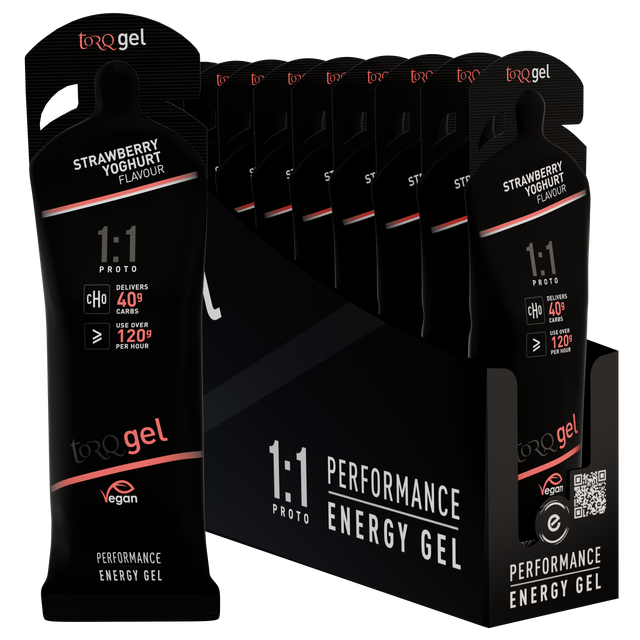
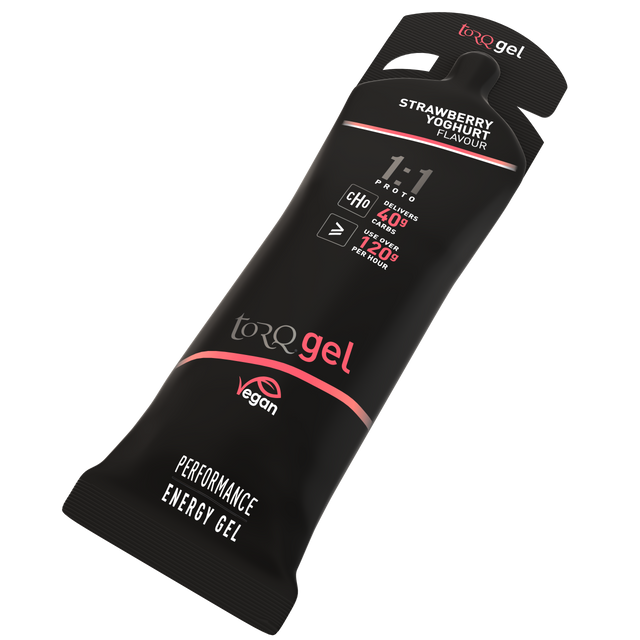
1:1 Proto Strawberry Yogurt Energy Gel - Box of 12
$42.00( / )Unavailable -
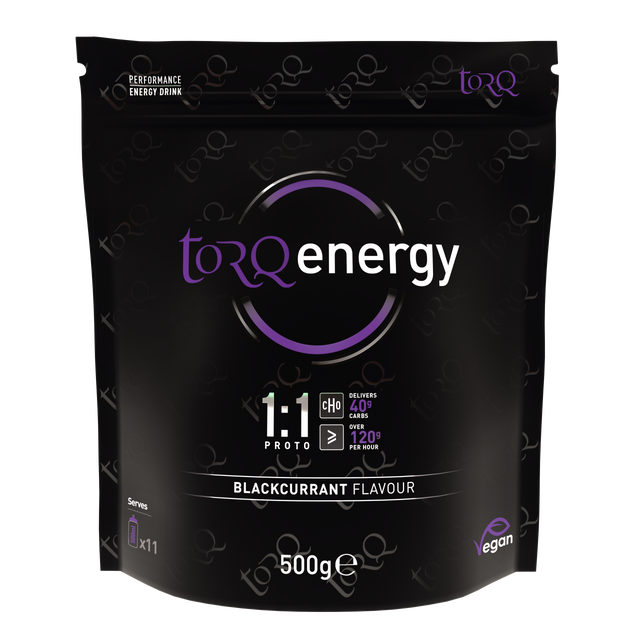
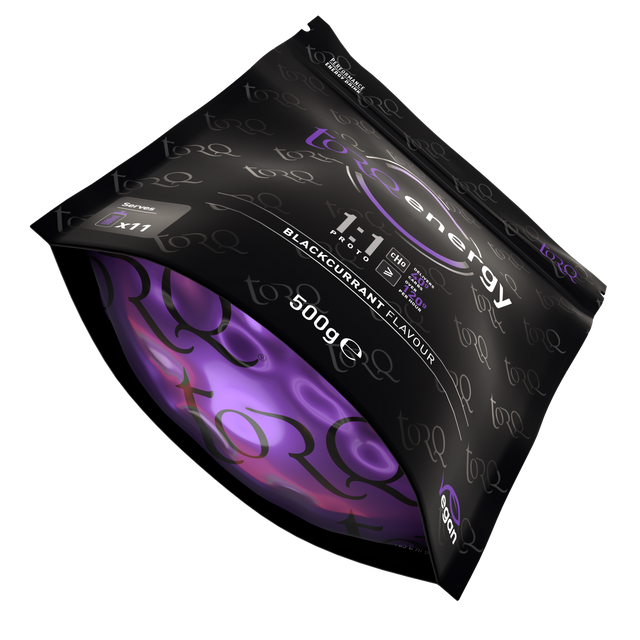
1:1 Proto Black Currant Energy Drink Mix - 500g (12serv) Pouch
$27.50( / )Unavailable -
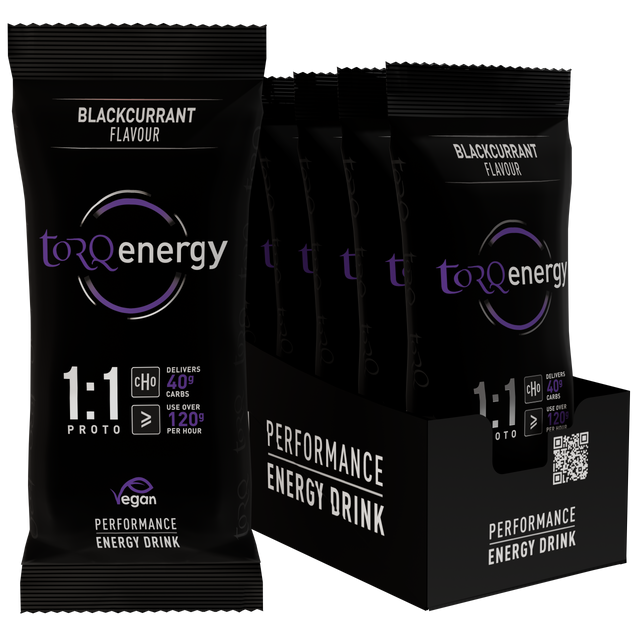
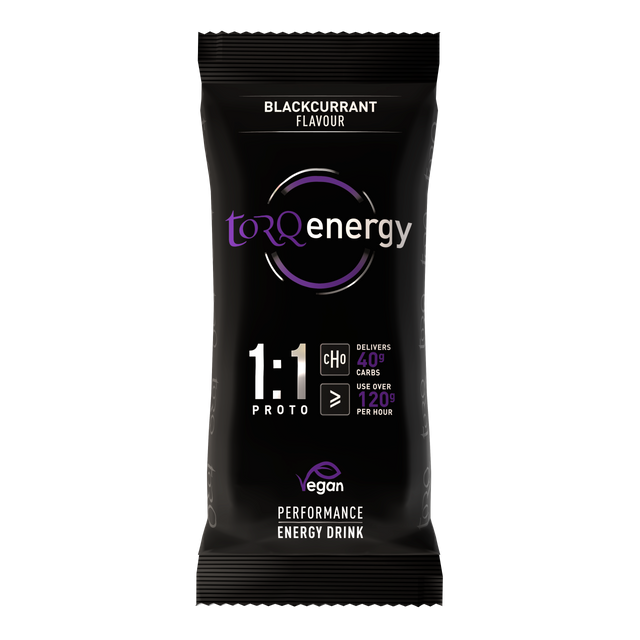
1:1 Proto Black Currant Energy Drink - Box of 12 Sachets
$35.75( / )Unavailable

1:1 Proto Gels complete the Advanced Fueling System
Performance isn't only about carbohydrate intake. it's about maintaining the balance between energy, hydration, and electrolytes over hours of sustained effort.
1:1 Proto Energy Drink was developed to work seamlessly alongside 1:1 Proto Energy Gels to maintain both fluid balance and carbohydrate intake throughout your longest training sessions and races. With every product providing 1 Advanced Torq Unit (ATU), building a 120g+ per hour strategy has never been simpler.